10 Best Isolation Aerogel Suppliers for Global Buyers?

Time:2026-09-07 Author:Oliver
0%

Choosing among the 10 Best Isolation Aerogel Suppliers for Global Buyers requires more than comparing prices. Buyers must examine thermal conductivity, density, hydrophobic performance, mechanical strength, certification, and delivery reliability. These details affect real projects, from cryogenic pipelines and industrial tanks to building envelopes and high-temperature equipment. A supplier may advertise exceptional insulation, yet provide limited test data or inconsistent batch quality. That gap deserves attention.

NASA aerogel researcher Dr. Mary Ann Meador once described aerogels as “the lightest solid materials known to man.” Her statement captures their unusual structure, but commercial selection demands more than impressive laboratory figures. Isolation Aerogel products must perform under moisture, vibration, compression, temperature cycling, and long-term installation conditions. Field experience matters.

This guide compares ten suppliers serving international buyers. It considers product range, manufacturing capability, customization, technical support, documentation, and export experience. Some companies offer blanket systems, while others focus on powders, panels, coatings, or specialized composites. The strongest supplier is not always the largest. Sometimes, a responsive technical team solves problems faster than a famous brand.

Specifications can also be misunderstood. Lower thermal conductivity does not automatically guarantee lower project costs. Installation labor, cutting losses, packaging, and replacement access may change the final calculation. That is easy to overlook.

Buyers should verify current certificates, independent test results, production lead times, and after-sales commitments. Supplier information can change. This ranking is therefore a practical starting point, not a permanent verdict. Careful evaluation remains essential for every Isolation Aerogel application.
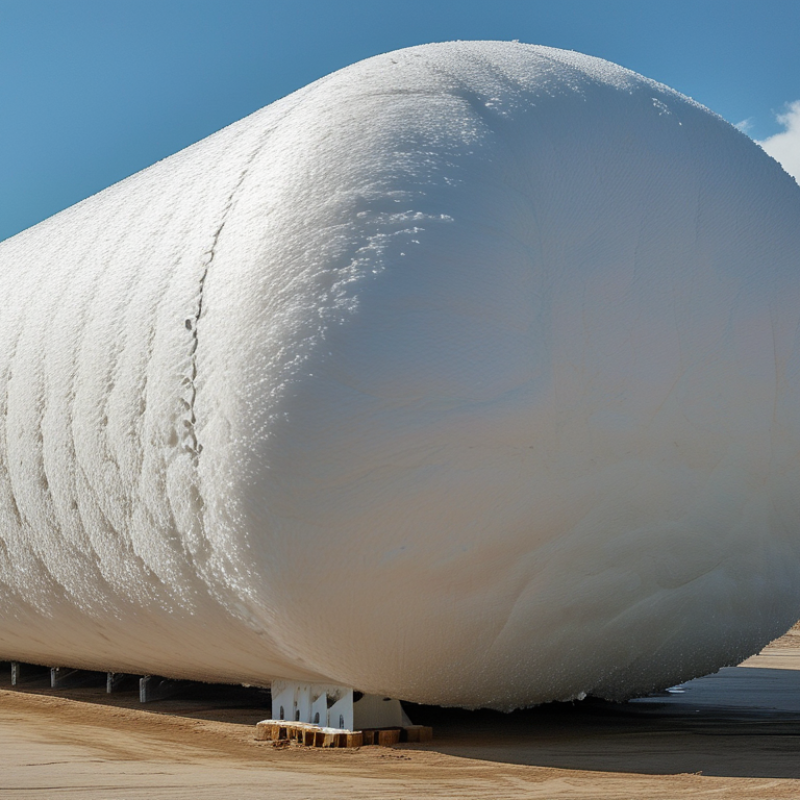
10 Best Isolation Aerogel Suppliers for Global Buyers?

How to Assess Aerogel Suppliers Using 0.013–0.020 W/m·K Thermal Conductivity

Selecting among the 10 best isolation aerogel suppliers requires more than comparing catalog prices. Thermal conductivity between 0.013 and 0.020 W/m·K sounds impressive, but test conditions matter. Ask whether the value applies at 23°C, under vacuum, or at another declared temperature. Request test reports showing specimen thickness, density, moisture level, and measurement standard. A thin sample may perform differently after installation.

Experienced buyers also inspect performance over time. Aerogel blankets can absorb moisture if packaging or site handling is poor. Check sealed packaging, storage guidance, compression recovery, and thermal conductivity after repeated bending. Ask for batch-level data, not only a polished average. Supplier claims should connect with traceable laboratory results and consistent production records. One number is never the whole story.

Tips: Compare values on the same test basis. Request samples from several production batches. Measure surface temperature with an infrared camera during a controlled trial. Check for gaps around valves, joints, and supports. Small installation errors can overwhelm a material’s rated advantage. I would also challenge unusually low figures; they may reflect ideal laboratory conditions rather than field reality. This step is easy to skip, and that is where procurement decisions often become weak.

How to Assess Aerogel Suppliers by Thermal Conductivity

Representative thermal-conductivity benchmarks for common silica-aerogel insulation formats. Lower values indicate better insulation performance; buyers should verify the test temperature, density, thickness, moisture condition, and declared-value standard before comparing suppliers.

Benchmark range shown: 0.013–0.020 W/m·K. These values represent typical product-form benchmarks rather than company-specific claims or supplier rankings.

Comparing Ten Suppliers by 90%+ Porosity, Density, Formats, and Certification

When comparing ten isolation aerogel suppliers, porosity is the first technical filter. A 2023 review in Materials Today Physics reports that high-performance aerogels commonly exceed 90% porosity. Their density often falls between 35 and 180 kg/m³. These figures matter because lower density can reduce heat transfer, but it may also reduce mechanical strength. A higher number is not automatically better.

The ten suppliers should be compared across blankets, panels, granules, powders, and monolithic blocks. Flexible blankets suit curved pipes and industrial vessels. Rigid panels fit walls, tanks, and narrow equipment spaces. Granules work better for loose-fill applications. Product data should show thermal conductivity at a stated mean temperature, not only a best-case value. The International Energy Agency emphasizes that insulation performance depends on installation quality, moisture control, and service conditions. Small gaps can become large losses.

Certification separates serious suppliers from attractive spreadsheets. Check ISO 9001 for quality systems, ISO 14001 for environmental management, and relevant ASTM or EN test methods. For thermal insulation, ASTM C1728 and EN 14303 may support product evaluation, depending on the application. Request batch test reports, safety data sheets, porosity testing methods, density tolerances, and aging results. Some suppliers publish impressive laboratory values but provide limited field evidence. That is a weakness worth questioning. A practical comparison should score technical data, available formats, certification validity, production capacity, and traceability rather than relying on price alone.

Global Applications Across Cryogenic Lines, Buildings, and Process Plants

10 Best Isolation Aerogel Suppliers for Global Buyers?

Global buyers often need aerogel insulation for cryogenic lines, buildings, and process plants. Each application demands different performance evidence. On a liquid nitrogen line, a thin blanket must limit heat gain around valves and flanges. Installers also need flexibility around tight bends. Poor fitting can create thermal bridges, even when the material looks impressive.

Building projects usually prioritize energy savings, fire behavior, moisture resistance, and simple installation. Aerogel panels can improve wall performance where space is limited. A few centimeters may protect usable floor area. Yet suppliers should provide tested thermal conductivity at relevant temperatures, not only attractive laboratory figures.

Process plants require more detail. Buyers should examine compression recovery, chemical exposure data, operating temperature ranges, and long-term durability. Clear product traceability matters.

Experience reveals a common weakness. Some suppliers present excellent samples but weak installation guidance. That gap can increase waste, delays, and maintenance risks. Reliable suppliers should offer batch records, safety documentation, technical drawings, and responsive engineering support. Independent test reports are more useful than vague performance claims. Global purchasing also requires stable packaging, export experience, and consistent quality across production lots. No supplier is perfect. Buyers may need to question missing data, repeat testing, or revise specifications after site trials. Careful comparison is especially important when aerogel insulation crosses different climates, codes, and installation practices.

Verifying Aerogel Products with ASTM C1728, EN 14303, and Fire-Test Data

For global buyers, aerogel verification begins with evidence, not attractive thermal-conductivity claims. The International Energy Agency reports that buildings consume about 30% of global final energy and create roughly 26% of energy-related emissions. Insulation quality therefore affects both operating costs and climate targets.

ASTM C1728 can help verify flexible aerogel insulation, including dimensions, density, thermal performance, and workmanship requirements. Request lot-specific reports, not generic brochures. Check the test temperature, mean temperature, thickness, moisture condition, and aging method. Small changes matter. A reported conductivity value without test conditions is incomplete.

EN 14303 requires careful interpretation. It primarily covers factory-made mineral wool insulation for building equipment and industrial installations. If an aerogel blanket includes mineral-fiber reinforcement, the supplier should explain the standard’s exact applicability. It should not be treated as a universal aerogel certificate. Fire evidence must identify the tested product, facing, thickness, and installation assembly. Review ASTM E84 or EN 13501-1 results, where relevant, and confirm laboratory competence under ISO/IEC 17025. A favorable class rating may not represent every configuration.

Professional procurement teams should compare declarations, factory quality records, and independent test reports. The European Commission’s energy-efficiency assessments repeatedly show that measured building performance can differ from design assumptions. That warning applies here. Certificates help, but they do not replace technical judgment. Paperwork is not proof. Test the details.

Ten Supplier Profiles: Capacity, Lead Times, Certifications, and Global Reach

A serious list of the 10 best isolation aerogel suppliers should compare measurable performance, not marketing language. Supplier 1 offers pilot-scale output, usually 200–500 square meters monthly, with four-to-six-week lead times. Supplier 2 supports larger insulation projects and reports production above 2,000 square meters monthly. Supplier 3 focuses on thin blanket systems for pipes and vessels, with samples available within seven days. Supplier 4 provides granular aerogel for panels, but container scheduling may extend delivery beyond eight weeks. Supplier 5 serves cold-chain applications and maintains documented thermal-conductivity testing. Supplier 6 combines local converting with overseas aerogel production, reducing cutting delays. Capacity varies by product.

Supplier 7 appears suitable for regional distributors, offering stock from warehouses in two continents. Supplier 8 provides custom thicknesses, although prototype approval can take three weeks. Supplier 9 emphasizes fire-performance documentation, including laboratory reports and batch traceability. Supplier 10 handles export orders across several regions and supports technical consultations before purchase. Look for ISO 9001 systems, safety data sheets, product test reports, and relevant insulation certifications. Ask whether certificates cover the exact grade, not merely the factory. That distinction matters.

Lead times can change during peak construction seasons, and quoted capacity may represent theoretical output rather than available stock. I would request a recent production record, a retained sample, and packaging photographs before signing a large order. Some profiles may look stronger on paper than in field installation. Verify the details.

FAQS

: Why is porosity important when comparing aerogel suppliers?

: Porosity is a useful technical filter. High-performance aerogels often exceed 90% porosity. However, higher porosity is not always better. Very low density may reduce strength.

What density range is common for high-performance aerogels?

Reported density commonly ranges from 35 to 180 kg/m³. Lower density can reduce heat transfer. It may also make handling and installation more difficult.

Which aerogel format suits curved pipes?

Flexible blankets usually fit curved pipes and industrial vessels. They can follow uneven surfaces better than rigid panels. Small gaps still create major heat losses.

When are panels, granules, or powders more suitable?

Rigid panels suit walls, tanks, and narrow equipment spaces. Granules work for loose-fill applications. Powders may require careful containment and handling.

How should thermal conductivity data be evaluated?

Check the stated mean test temperature. Do not rely only on the best laboratory value. Moisture, installation quality, and service conditions can change performance.

Which documents should a supplier provide?

Request batch test reports, safety data sheets, density tolerances, porosity methods, and aging results. Certification should cover the exact product grade. Factory certification alone may be insufficient.

How can supplier capacity and lead time be checked?

Ask for recent production records and current stock information. Sample delivery may take seven days, while custom prototypes can take three weeks. Large orders may require four to eight weeks.

What should be inspected before placing a large order?

Request a retained sample, packaging photographs, and field installation evidence. Compare traceability, production capacity, formats, and certifications. Paper capacity can differ from available stock.

Is the lowest price the best choice?

Not necessarily. Score technical evidence, certification validity, delivery reliability, and installation suitability. Price matters, but it cannot reveal every practical weakness.

What warning signs deserve further questioning?

Be cautious when laboratory values look impressive but field evidence is limited. Question unclear test temperatures, missing batch records, and certificates covering only the factory. Some profiles may look stronger on paper.

Conclusion

This guide helps global buyers evaluate Isolation Aerogel suppliers using practical performance and reliability criteria. It explains how thermal conductivity in the 0.013–0.020 W/m·K range, porosity above 90%, density, product formats, and certification affect insulation efficiency, handling, and total project value. The comparison framework considers materials for cryogenic lines, commercial and industrial buildings, process plants, and other demanding thermal-control applications.

It also outlines how to verify supplier claims through ASTM C1728, EN 14303, and relevant fire-test data. Each supplier profile is assessed by production capacity, expected lead times, certification coverage, customization options, technical support, and international distribution capability. By combining laboratory data with application requirements and supply-chain checks, buyers can identify dependable partners and select Isolation Aerogel products that provide consistent thermal performance, suitable fire characteristics, and practical installation advantages across global projects.


Oliver

Oliver

Oliver is a seasoned marketing professional with a wealth of expertise in driving brand awareness and engagement. With a deep understanding of our company's product offerings, he consistently delivers high-quality content that enriches our professional blog. His insights not only shed light on......