Where to Find the Best Vacuum Insulation Material in China?

Time:2026-11-01 Author:Liam
0%

China has become a major sourcing base for advanced thermal insulation products, including Vacuum Insulation Material. Its advantages include dense manufacturing clusters, export experience, and access to barrier-film suppliers.

Market evidence supports this demand. Grand View Research’s 2024 Vacuum Insulation Panel Market report identifies construction, refrigeration, and cold-chain logistics as important growth sectors. MarketsandMarkets’ Vacuum Insulation Panel Market forecast also highlights rising demand for thinner, energy-saving insulation. These findings matter because performance depends on more than low thermal conductivity. Panel thickness, core density, vacuum stability, edge sealing, and aging resistance all influence real-world results.

The best supplier is rarely found through a polished website alone. Practical factory evaluations should include production records, laboratory test reports, and sample inspections. Ask for declared thermal conductivity, service-life data, dimensional tolerances, and performance after humidity exposure. A credible manufacturer should explain its testing method clearly. It should also provide traceability from raw material to finished panel.

China offers many capable producers, but quality can vary between batches. That is the difficult part. Some suppliers publish impressive values without explaining measurement conditions. Buyers should compare test methods, not only numbers. Relevant references may include ISO 16478 for vacuum insulation panels and applicable Chinese standards for building and appliance insulation.

Supplier selection is not flawless. Even a strong sample may not represent long-term production. Independent verification remains wise. For this reason, this guide focuses on where to find reliable Vacuum Insulation Material in China, how to assess technical evidence, and which warning signs deserve closer attention. Lower cost is useful, but stable performance protects the project.
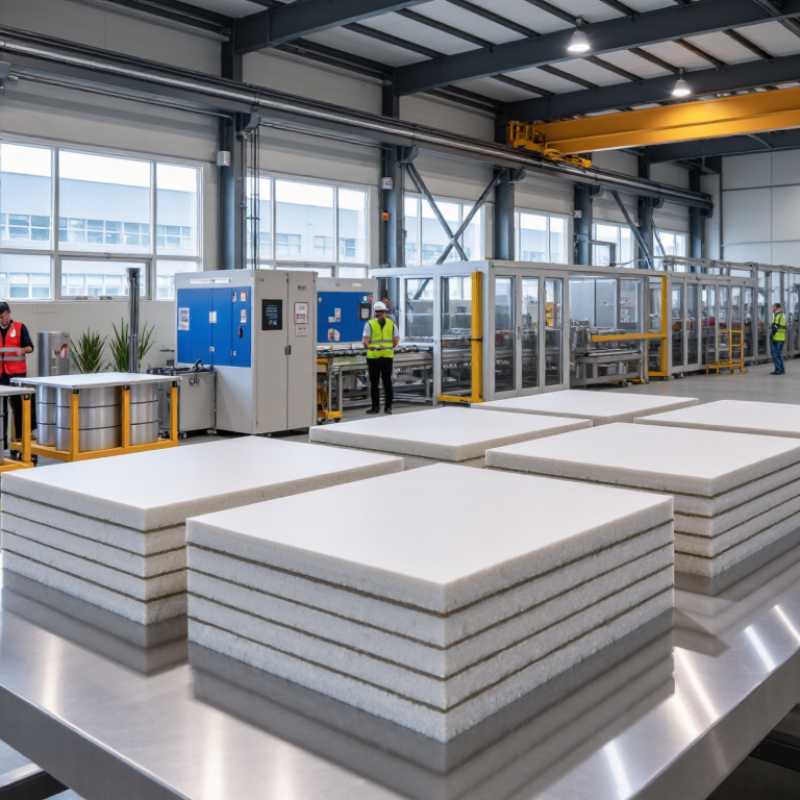
Where to Find the Best Vacuum Insulation Material in China?

Set the Benchmark: VIP Thermal Conductivity Commonly Ranges from 0.002–0.008 W/(m·K)

In China, the best place to source vacuum insulation panels is not defined by location alone. Compare manufacturers by test data, production controls, and clear technical communication. A typical VIP thermal conductivity range is 0.002–0.008 W/(m·K), but the quoted figure needs context. It can vary with temperature, panel thickness, core structure, and measurement method. Small differences matter.

Numbers need context.

When comparing suppliers, request a current test report that states the test temperature, conditioning, and measurement standard. Ask whether the result applies to a fresh panel or one tested after aging.

Ask for evidence. Check how the supplier monitors panel thickness, edge sealing, and vacuum integrity during production. These details can affect performance after installation, even when a sample performs well in a laboratory.

One detail is easy to miss: a low conductivity value does not guarantee the best fit for every application. Compare the full specification with your required dimensions, service conditions, and handling limits. A tidy datasheet is useful, but independent, traceable test results are more reassuring. One practical question remains: will production panels match the tested sample? Requesting batch records can help clarify that point.

Compare Core Materials: Fumed Silica, Glass Fiber, and Composite Fillers

Where to Find the Best Vacuum Insulation Material in China?

Compare core materials before comparing quotations. Fumed silica is widely used because its fine pores limit gas movement and retain useful insulation after some vacuum loss. The IEA EBC Annex 65 report places fresh vacuum insulation panel conductivity broadly around 0.004–0.008 W/(m·K); actual results depend on core, envelope, and test conditions. Ask suppliers for test methods, not just a headline number.

Glass-fiber cores can reach very low initial conductivity, but their performance depends strongly on a sound vacuum and sealed edges. Fumed silica is often heavier, yet may offer more tolerance as pressure rises. Composite fillers blend materials to balance cost, strength, and thermal performance. Baetens and colleagues’ review in Energy and Buildings (2010) discusses these core trade-offs. Small differences matter. A few millimeters at a panel joint can create a cold bridge.

When sourcing in China, request batch-level density, moisture, dimensions, and thermal-conductivity data. Check edge quality and inspect sample panels for dents or uneven thickness. Test at the intended temperature and pressure where possible. A supplier’s figure may not match your assembly. I would also ask how results change after aging; this is easy to overlook. No core wins every project. Compare service conditions, not claims alone.

Match Chinese Suppliers to Building, Appliance, and Cold-Chain Applications

Choosing a Chinese vacuum insulation material supplier starts with the application, not the lowest quoted price. For buildings, ask whether panels fit the wall or roof assembly, tolerate expected compression, and arrive with protected edges. Request thermal conductivity data, dimensions, aging conditions, and installation guidance. A sample reveals handling limits. Small details matter.

For appliances, prioritize thin profiles, stable performance across operating temperatures, and conversion to exact product dimensions. Discuss dimensional tolerances, barrier-film options, sealing consistency, and inspection records. Compare data measured under similar conditions; different test methods can make results misleading. Do not assume low initial conductivity guarantees lasting performance.

Cold-chain panels for boxes, refrigerated vehicles, or containers may face repeated loading, vibration, and moisture. Confirm puncture resistance, joint design, and performance after handling trials. Ask for batch traceability and packaging that protects corners in transit. A supplier may make strong panels but offer limited application support. That gap is easy to miss. Review technical requirements together, then evaluate a pilot build before ordering at scale.

Verify GB/T 37608-2019 Compliance and Independent Test Reports

When sourcing vacuum insulation material in China, ask suppliers for evidence against GB/T 37608-2019, not just a compliance statement. Confirm the standard’s applicability to the product and request the complete test report, including sample description, test methods, results, and date. The tested sample should match the product being quoted: core, thickness, facing, and edge construction can all affect performance. Check the laboratory’s accreditation scope and whether the report identifies measurement uncertainty. Numbers matter.

Independent results help put performance claims in context. The GlobalABC Global Status Report for Buildings and Construction 2023/24 estimates that buildings accounted for 34% of global energy demand and 37% of energy- and process-related CO₂ emissions in 2022. These figures explain why insulation performance matters, but they do not validate any single panel. Compare reported thermal conductivity with the stated test conditions, then ask how the value changes after aging or exposure to moisture. Check the sample.

A useful supplier conversation is specific: request recent reports, traceable sample details, and production quality records. For vacuum insulation panels, inspect thickness and dimensions, sealing edges, and any reported durability testing. A report from an independent laboratory is valuable, but it cannot guarantee every shipment matches the tested sample. That gap deserves attention. Ask how incoming materials and finished panels are checked, and retain agreed specifications with the purchase documents.

Compare Aged Conductivity, Panel Sizes, Minimum Orders, and Warranty Terms

When sourcing vacuum insulation material in China, ask for aged thermal conductivity, not only the fresh-panel figure. Request test data after specified aging or conditioning, with temperature, humidity, and sample thickness stated. These details make supplier quotes easier to compare. A low number without test conditions tells you little.

Check panel dimensions against your product drawings. Standard sizes may reduce cost, while custom panels can add tooling time and minimum order quantities. Ask whether small trial orders are available, and confirm tolerances, cutting limits, and packaging. A panel that arrives chipped or compressed may not perform as expected. Measure samples yourself, too.

Warranty terms deserve the same attention as technical data. Read what the warranty covers, how long it lasts, and what evidence is needed for a claim. Confirm whether damage during shipping, moisture exposure, or incorrect installation is excluded. Get the terms in writing. I would compare at least three quotes using one shared specification sheet; otherwise, differences in test methods can make a weaker offer look better. That comparison takes time. It can still miss a detail. Ask one final question: how will the supplier handle a batch that fails inspection?

FAQS

How should I choose a vacuum insulation material supplier for building projects?

Start with the wall or roof assembly, not the lowest price. Check panel fit, compression resistance, protected edges, and installation guidance. Request conductivity data, dimensions, and aging conditions. A physical sample shows handling limits. Small details matter.

What should appliance manufacturers check before ordering insulation panels?

Prioritize thin profiles, stable performance, and accurate conversion to product dimensions. Confirm tolerances, barrier-film options, sealing consistency, and inspection records. Compare data measured under similar conditions. A low initial conductivity may not remain stable.

What requirements matter for cold-chain insulation panels?

Check resistance to punctures, vibration, moisture, and repeated loading. Review joint design and handling-test results. Ask for batch traceability and corner-protective packaging. Strong panels may still come with limited application support. That gap matters.

What evidence should a supplier provide for standard compliance?

Request a complete, recent test report, not only a compliance statement. Check the product’s core, thickness, facing, and edge construction. Confirm the laboratory’s accreditation scope and measurement uncertainty. Numbers matter.

Why should I request aged thermal conductivity data?

Fresh-panel conductivity does not show long-term performance. Ask for results after defined aging or conditioning. The report should state temperature, humidity, and sample thickness. Moisture can change results. Check the sample.

How can I compare panel sizes, custom designs, and minimum orders?

Compare dimensions with your product drawings. Standard sizes may reduce costs, while custom panels can require tooling and larger orders. Confirm tolerances, cutting limits, packaging, and trial-order availability. Measure samples yourself. I might still miss a small mismatch.

What should warranty terms cover?

Read the coverage period, claim evidence, and exclusions carefully. Check treatment of shipping damage, moisture exposure, and incorrect installation. Keep the terms in writing. A short clause can matter.

How can I reduce risk before placing a large order?

Use one shared specification sheet for at least three quotations. Evaluate samples and complete a pilot build first. Ask how failed batches are inspected, replaced, or handled. An independent report helps, but it cannot guarantee every shipment matches. That is the uncomfortable part.

Conclusion

Choosing the best Vacuum Insulation Material in China starts with understanding performance: VIP thermal conductivity commonly falls between 0.002 and 0.008 W/(m·K), though actual results depend on the core, barrier structure, and testing conditions. Fumed silica, glass fiber, and composite fillers each offer different balances of insulation efficiency, durability, cost, and suitability for particular panel designs.

Match the material and supplier to its intended use, whether for buildings, appliances, or cold-chain systems. Before purchasing, check compliance with GB/T 37608-2019 and request independent test reports. Compare aged thermal conductivity as well as initial performance, available panel sizes, minimum order quantities, and warranty terms. Evaluating these factors together can help buyers identify a solution that meets both practical application needs and long-term performance expectations.


Liam

Liam

Liam is a dedicated marketing professional with a profound expertise in the industry, where he excels at highlighting the unique advantages of our core products. With a keen understanding of market trends and consumer needs, Liam frequently updates our company’s professional blog, providing......