Choosing a Chinese supplier takes more than comparing prices or reading a polished catalogue. Heat Insulation Panels differ in core material, thickness, fire performance, moisture resistance, and intended use. A panel suited to a cold-storage room may not fit a roof or exterior wall. Small details matter: edge joints, protective facings, and how panels meet at corners can affect installation and long-term performance.
Building-science expert Dr. Joseph Lstiburek is associated with the principle, “The perfect wall is a wall that has all of the control layers on the outside.” That idea is a useful reminder: insulation works as part of an assembly, not in isolation. This guide to China’s top 10 manufacturers will help readers compare product ranges, technical documentation, production capability, quality controls, and project experience. Where possible, buyers should verify test reports and certifications directly, then check whether stated performance applies to the exact panel configuration being quoted.
There is no universal winner. A factory’s scale may be impressive, yet sample consistency and responsive technical support can matter more for a specific project. Ask about lead times, custom dimensions, packaging, and installation guidance before placing an order. One caution: rankings can change, and public information may be incomplete. Treat this list as a starting point, not a substitute for checking specifications and samples.
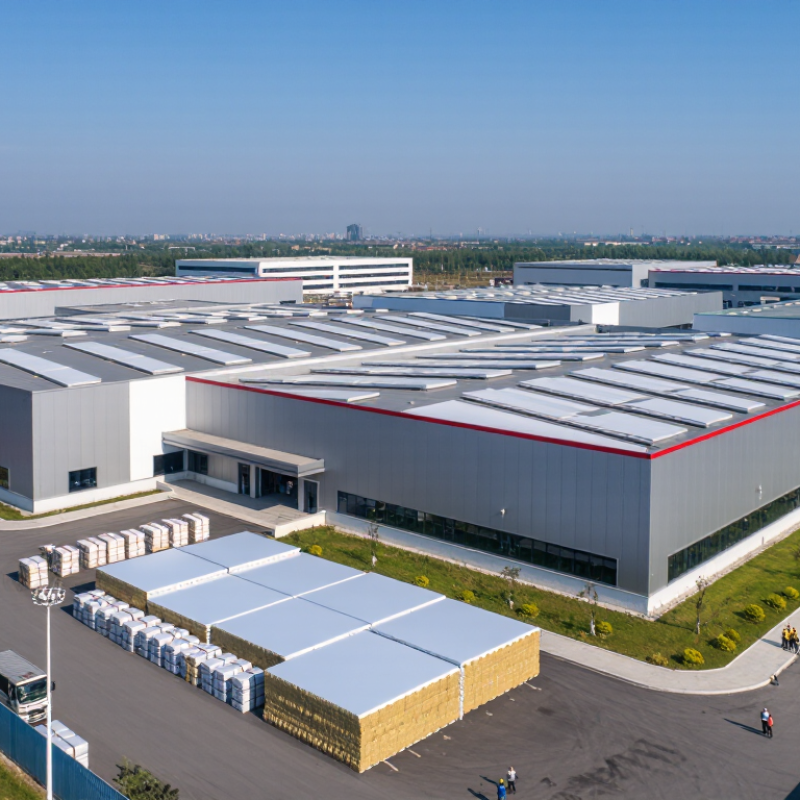
China Top 10 Heat Insulation Panel Manufacturers?
What Are Heat Insulation Panels and Where Are They Used?
Heat insulation panels are layered building products that slow heat moving through walls, roofs, or floors. Their cores may use foam or mineral-based materials, with facings chosen for strength, moisture resistance, or installation needs. They help indoor spaces stay more comfortable and can reduce heating and cooling demand. That gap matters. A panel’s actual performance depends on its core, thickness, joints, and how carefully it is installed.
You’ll find these panels in exterior walls, roof assemblies, interior partitions, and some floors. They are also used in refrigerated rooms, where stable temperatures are essential. Different locations need different properties. A roof panel, for example, may face strong sun and rain, while a cold-room panel must limit heat gain and manage condensation. Not every panel fits. Check product data for thermal performance, fire behavior, moisture limits, and suitable applications. A small unsealed joint can weaken an otherwise well-insulated surface.
Tips: Match the panel to the climate and building detail. Keep joints snug, and pay attention to corners, fasteners, and openings. Those spots are easy to overlook. Before choosing, compare tested performance rather than thickness alone; a thicker panel is not automatically the better option.
A material-level comparison of typical thermal conductivity ranges—not a ranking of manufacturers or products.
Thermal conductivity is measured in W/(m·K); lower values generally indicate better insulation. Values shown are approximate typical ranges and can vary with product formulation, density, temperature, and test method. Heat insulation panels are used in building walls, roofs, floors, foundations, and refrigeration applications.
Selecting China’s leading heat insulation panel manufacturers requires more than comparing catalogues. UNEP and the Global Alliance for Buildings and Construction reported that buildings and construction accounted for 32% of global energy demand and 34% of energy-related CO₂ emissions in 2022. That makes verified thermal performance and dependable product quality essential. A credible shortlist should examine declared thermal conductivity, panel thickness, fire-test documentation, production capacity, and delivery records. Test reports should identify the tested product and batch where possible.
A practical assessment can score technical evidence, quality control, project experience, and after-sales support separately. Review factory inspection records and ask whether routine production tests match independent laboratory results. For project experience, check references involving similar climates and building uses; a cold-storage panel and an exterior-wall panel may face different demands. Public information is often uneven, and a polished website is not proof of consistent output. This comparison has limits, so rankings should be treated as a starting point, not a guarantee.
Tips: Request recent test reports, confirm the applicable test method, and compare like-for-like thicknesses. Ask how the supplier tracks batches and handles defects. One missed detail matters. A low quoted price may hide differences in core density, facing material, or testing scope.
Profiles of China’s Top 10 Heat Insulation Panel Manufacturers
A useful profile of China’s top ten heat insulation panel manufacturers should explain what each producer actually makes. The ten profiles can represent EPS, XPS, rock wool, glass wool, PIR, PUR, phenolic, sandwich, cold-storage, and cleanroom panel specialists. Some companies cover several categories, so product range alone does not prove expertise. Details matter.
Compare each manufacturer’s stated core materials, panel thicknesses, facing options, and intended applications. Strong profiles also describe factory testing, quality-control steps, production capacity, and whether samples are available. Ask for product-specific test reports; performance can vary with panel structure and installation. Check whether quoted fire, thermal, or acoustic ratings apply to the exact model. A polished catalog is not enough. Even careful comparisons can miss differences in local installation practice, so profile claims deserve verification.
Tips: Request technical data sheets and recent test records for the precise panel specification. Confirm lead time, packaging, and customization in writing. Look for clear answers, not just attractive figures.
Comparing China’s ten leading heat-insulation panel manufacturers means looking beyond advertised thermal conductivity. A useful assessment checks core material, panel thickness, density, facing durability, and tested fire performance. It also examines whether production tolerances stay consistent across large orders. Small differences matter: a poorly sealed joint can weaken an otherwise efficient wall. Ask for test reports using recognized methods, such as ASTM C518 for thermal transmission, and confirm that results apply to the exact panel configuration. That detail is often missed.
The GlobalABC and UNEP 2024 Global Status Report for Buildings and Construction estimates that buildings and construction account for 34% of global energy demand and 37% of energy- and process-related CO₂ emissions. These figures are not panel performance ratings, but they show why verified insulation data matters. Compare each supplier’s published conductivity with independent test results, then review factory quality controls, customization options, and delivery capacity. Request samples, too. Feel the panel edges and inspect the facing for gaps or damage. One limitation remains: public product sheets rarely reveal how performance changes after years of moisture exposure or repeated temperature shifts. A careful buyer should ask for supporting durability evidence, not just a tidy specification table.
The comparison below covers ten common insulation-panel product categories available from manufacturers in China. It is a product-technology overview, not a verified ranking or a company-by-company assessment.
| Product Category | Typical Core or Construction | Typical Thermal Conductivity (W/m·K) | Fire-Performance Considerations | Common Applications | Typical Manufacturing Capability |
|---|---|---|---|---|---|
| EPS sandwich panel | Expanded polystyrene core bonded between metal facings or other skins | Approximately 0.035–0.040 | EPS is combustible; performance depends on the complete panel assembly and applicable test results. | Light industrial buildings, temporary structures, and general-purpose wall or roof systems | Cut-to-length panels, profiled facings, and standard thickness options; joint design and bonding quality are important. |
| XPS insulation panel | Extruded polystyrene rigid foam board, commonly supplied as a separate insulation layer | Approximately 0.029–0.036 | XPS is combustible; confirm the tested fire classification for the finished system. | Roofs, floors, foundations, and other applications requiring moisture-resistant rigid insulation | Board extrusion, edge finishing, and thickness or surface options; suitability depends on compressive and moisture requirements. |
| PIR sandwich panel | Polyisocyanurate foam core with metal facings or other specified skins | Approximately 0.022–0.028 | Fire performance varies by formulation, facings, joints, and assembly; request relevant test documentation. | Industrial buildings, commercial envelopes, and temperature-controlled spaces | Continuous or batch foaming, facing lamination, and panel profiling; dimensional control and joint detailing affect system performance. |
| PUR sandwich panel | Polyurethane foam core bonded to metal facings or other skins | Approximately 0.022–0.028 | Combustibility and fire classification are product- and assembly-specific; verify test reports for the intended use. | Building envelopes, cold rooms, and insulated industrial enclosures | Foam dispensing, lamination, cutting, and panel joint production; confirm the specified core density and dimensional tolerances. |
| Rock wool sandwich panel | Mineral wool core between metal facings or other panel skins | Approximately 0.036–0.045 | Mineral wool is generally non-combustible, but the classification of a complete panel depends on its facings, joints, and testing. | Industrial and commercial buildings where fire resistance or acoustic performance is a design consideration | Core lamination, facing profiling, and edge or joint fabrication; panel orientation and core density should match the design specification. |
| Glass wool panel | Glass-fiber insulation core, supplied as a panel or incorporated into a faced system | Approximately 0.032–0.044 | Fire behavior depends on the complete product, including binders and facings; check the applicable classification. | Walls, ceilings, roofs, and applications requiring thermal and acoustic insulation | Fiber forming, cutting, facing, and packaging; confirm thickness, density, facing type, and intended installation method. |
| Phenolic foam insulation panel | Rigid phenolic foam board, sometimes supplied with facings | Approximately 0.020–0.025 | Fire and smoke properties depend on the specific formulation and faced product; use verified test data. | Building-envelope insulation and projects seeking high thermal resistance at limited thickness | Foam-board production, facing application, and precision cutting; check compatibility with adhesives and the specified system. |
| Cold-room PU panel | Rigid polyurethane core with metal facings and interlocking panel joints | Approximately 0.022–0.028 | Fire classification is specific to the panel design and test method; cold-room use does not itself indicate a fire rating. | Refrigerated warehouses, food-processing rooms, and temperature-controlled enclosures | Panel foaming, cam-lock or other joint options, and made-to-order dimensions; airtight joints and installation details are critical. |
| Cold-room PIR panel | Rigid PIR core with faced skins and sealed or interlocking joints | Approximately 0.022–0.028 | Verify the complete assembly’s fire-test documentation; performance varies with core, facings, and joint construction. | Cold stores, clean environments, and temperature-controlled industrial facilities | Panel lamination, joint machining, and custom sizing; manufacturers may offer different facing materials and connection details. |
| Vacuum insulation panel (VIP) | Porous core sealed inside a high-barrier envelope under vacuum | Approximately 0.004–0.008 when new; performance can change with age or envelope damage | Fire performance depends on the core and envelope; the panel’s barrier film and edge details also require evaluation. | Applications with severe space constraints, such as specialized appliances or selected building details | Core preparation, evacuation, and barrier-envelope sealing; panels are sensitive to puncture and generally require careful installation. |
Thermal-conductivity figures are indicative ranges for common materials, not guaranteed values for a particular product. Actual results vary with formulation, density, temperature, aging, test method, facings, and construction. Request current technical data sheets, fire-test reports, and project-specific certifications before selection.
When comparing China’s heat insulation panel manufacturers, buyers should evaluate verified performance, not brochure claims.
UNEP’s 2024 Global Status Report for Buildings and Construction says the sector used 32% of global energy in 2023.
It also accounted for 34% of global CO2 emissions. That scale makes insulation quality more than a purchasing detail. Ask for proof.
Compare declared thermal conductivity, panel thickness, dimensional tolerances, and aging-test results. Request complete laboratory reports, not just a single figure. Check whether tested samples came from routine production. A polished sample can hide uneven core density or poorly bonded facings. Confirm that fire and moisture tests match the panel material and intended application; joints and coatings can affect results. Review batch traceability, inspection records, production capacity, warranty exclusions, and delivery history. If possible, inspect a recent shipment or arrange independent testing before a large order. Low quotes may be reasonable, but check what they exclude. I have seen comparisons miss freight, installation waste, and replacement costs. Those details deserve a second look.
They are layered building products that slow heat moving through walls, roofs, or floors. Their cores may be foam or mineral-based. Facings can add strength or moisture resistance. Small joints matter.
They appear in exterior walls, roofs, interior partitions, and some floors. Refrigerated rooms also use them to help maintain stable temperatures. A sunny roof and a cold room need different panel properties.
Match the panel to the climate and building detail. Check thermal performance, fire behavior, moisture limits, and intended use. Not every panel fits.
No. Performance also depends on the core, joints, and installation quality. Compare tested results for similar panel specifications, not thickness alone. That comparison can still miss site-specific details.
Request recent test reports for the exact panel model. Check the stated thickness, core material, facing, and applicable test method. Check the exact model.
Unsealed joints can weaken an insulated surface. Pay close attention to corners, fasteners, and openings. Those spots are easy to overlook. A neat panel face is not the whole job.
Compare quality-control records, production capacity, project experience, and delivery history. Ask how batches are tracked and how defects are handled. A polished catalog proves little.
Put the panel specification, lead time, packaging, and customization in writing. Request samples when available. Even careful checks have limits, so I would verify the details again.
This article explores China’s heat insulation panel industry, beginning with an overview of what Heat Insulation Panels are and how they are used in buildings, industrial facilities, and other applications where thermal performance matters. It also explains the criteria used to assess leading manufacturers, such as product range, production capabilities, quality management, technical support, and experience serving different project needs.
The profiles compare ten manufacturers without focusing on brand promotion, highlighting how their products and capabilities may differ. The article concludes with practical considerations for buyers, including insulation performance, material suitability, durability, certifications, customization options, delivery capacity, and after-sales service. Together, these sections offer a structured guide to evaluating suppliers and choosing a manufacturer whose products and support align with a project’s requirements.

JUTAO NEW MATERIAL