How to Choose the Best Aerogel Tape for Global Sourcing?

Time:2026-09-12 Author:Oliver
0%

Global sourcing of insulation materials demands more than comparing price per roll. Aerogel Tape can reduce heat transfer around pipes, valves, battery packs, and irregular joints. Yet its performance depends on density, thickness, adhesive quality, compression, and installation conditions. A tape that works beside a dry indoor pipe may fail on a vibrating outdoor line. That difference is easy to miss. Buyers should define temperature range, width, length, substrate, fire behavior, and required thermal conductivity before requesting quotations. Product data sheets matter. Independent test reports matter more. However, test results need context, including test method, sample thickness, and aging conditions. In practical sourcing work, vague specifications often create expensive revisions later.

A dependable supplier should explain material construction, adhesive compatibility, storage limits, lead times, packaging, and batch traceability. Request samples from the proposed production lot, not only polished samples prepared for sales meetings. Check unwinding force, edge stability, residue, adhesion after thermal cycling, and actual installation time. Small details become large costs. Global buyers should also verify factory capability, quality controls, export documentation, and communication speed. Regional standards may differ, so technical claims should be reviewed by qualified engineers or testing bodies. No sourcing checklist is perfect. Humidity, shipping damage, and changing formulations can still create surprises. A careful comparison records assumptions and tests them before volume purchasing. The best Aerogel Tape is not simply the thinnest or cheapest option. It is the option whose evidence, supply reliability, and field performance match the application.
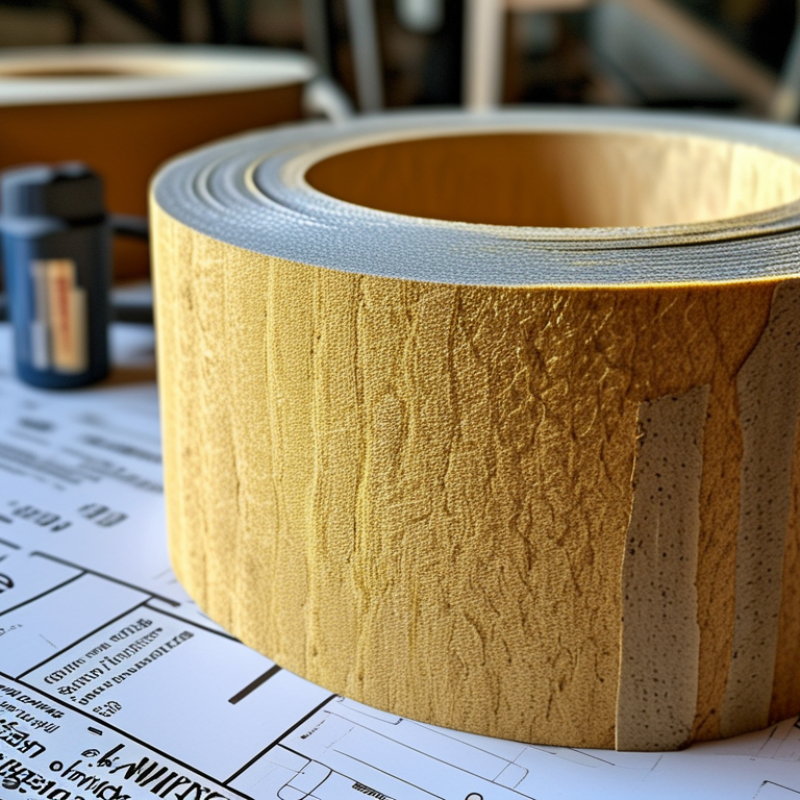
How to Choose the Best Aerogel Tape for Global Sourcing?

What Is Aerogel Tape and Why Does It Matter in Global Sourcing?

Aerogel tape is a flexible insulation product combining a porous aerogel layer with a carrier and pressure-sensitive adhesive. Its structure traps air, reducing heat transfer in narrow spaces. The U.S. Department of Energy reports that aerogels can contain more than 90% air and reach thermal conductivities near 0.015 W/m·K. That performance matters when pipes, valves, or battery modules have little installation clearance.

Global sourcing makes the specification more important than the product name. UNEP’s 2023 Global Status Report states that buildings and construction consumed about 34% of global energy and produced 37% of energy-related emissions in 2022. Better insulation can support efficiency goals, but tape performance depends on application conditions. Buyers should verify thermal conductivity, thickness tolerance, temperature range, adhesive shear strength, moisture resistance, and compression recovery. Test methods should be clearly identified, preferably through recognized laboratory standards.

Do not compare prices alone. A thinner tape may look cheaper but require extra layers, more labor, or earlier replacement. Request samples and test them on the actual substrate, especially metal surfaces with dust, oil, or curved edges. Packaging also deserves attention; crushed rolls can lose usable width before installation. I would also question impressive conductivity figures measured without adhesive or under ideal laboratory conditions. That detail is easy to miss. Supplier audits, batch records, and third-party test reports improve reliability, although they cannot remove every sourcing risk.

Which Performance Factors Define the Best Aerogel Tape?

How to Choose the Best Aerogel Tape for Global Sourcing?

Which Performance Factors Define the Best Aerogel Tape?

Thermal conductivity is the first filter, not the final answer. Published technical reviews commonly report silica aerogel conductivity near 0.012–0.020 W/m·K at room temperature. However, these values often describe flat samples, not finished tape. A 20°C laboratory result may disappoint around a vibrating pipe. Request data at the intended mean temperature, thickness, and compression level. Test the real tape.

Adhesion must survive temperature cycling, vibration, and surface contamination. Ask for peel and shear results under ASTM D3330 and relevant high-temperature conditions. Check whether the adhesive remains flexible below freezing. Measure thickness after installation, because compression can reduce thermal resistance. Moisture matters too. A reliable supplier should provide water-vapor resistance, dimensional stability, and flame-test results, not only a glossy datasheet.

Energy impact gives this choice broader importance. The U.S. Department of Energy’s Industrial Decarbonization Roadmap identifies process heating as about 51% of industrial energy use. The International Energy Agency’s Energy Efficiency 2023 report says annual efficiency progress must rise from roughly 2.2% to over 4% by 2030. Aerogel tape can support that goal, but only when joints stay sealed. In sourcing trials, lot-to-lot adhesive variation is easy to overlook. It should not be. Require traceable batch records, independent test reports, and samples tested on your actual substrate. The “best” specification is still incomplete without installation evidence.

How to Choose the Best Aerogel Tape for Global Sourcing? - Which Performance Factors Define the Best Aerogel Tape?

The table below provides a practical, brand-neutral qualification framework for comparing aerogel insulation tapes used in thermal management, pipe insulation, battery systems, industrial equipment, and other demanding applications.

Performance factor Typical benchmark or screening range Why it matters in global sourcing Recommended test or verification Preferred sourcing indicator
Thermal conductivity Approximately 0.018–0.030 W/m·K at around 23°C, depending on construction, density, and test method Lower conductivity generally provides more insulation in a thinner and lighter tape system. Request a third-party report identifying temperature, specimen conditioning, thickness, and test standard. Consistent results from lot to lot, with the test method clearly stated.
Service temperature Aerogel media may support roughly −180°C to +650°C; the adhesive, liner, and facing usually determine the usable tape range. The tape must remain functional throughout the actual operating, start-up, shutdown, and storage temperatures. Review technical data for continuous and short-term exposure limits; test the complete tape assembly, not only the aerogel. Separate temperature ratings for the insulation layer, adhesive, and finished tape.
Thickness and thermal resistance Common tape constructions are approximately 1–10 mm thick; thermal resistance should be calculated as R ≈ thickness ÷ thermal conductivity. Thickness affects heat-loss targets, clearance, wrapping cycles, shipping volume, and installation access. Measure thickness under a defined pressure and confirm thermal resistance at the intended temperature. Tight thickness tolerance and a clearly defined measurement method.
Adhesion and peel strength No universal value applies; performance depends strongly on substrate, dwell time, temperature, and adhesive type. A practical qualification should specify the required N/25 mm value. Adequate adhesion prevents lifting, gaps, thermal bridges, and rework during transport or service. Use 180° peel testing after defined dwell periods on each target substrate, including metal, painted surfaces, and polymeric surfaces. Substrate-specific data rather than one generic peel value.
Shear holding power Must be established for the actual load, temperature, and orientation; there is no reliable universal pass value for every tape design. Shear resistance is important when tape is installed vertically, around curved surfaces, or under vibration. Run static shear tests at room temperature and at the highest expected service temperature. Documented failure mode, load, temperature, and holding time.
Flexibility and conformability The product should bend around the specified minimum radius without cracking, delamination, or loss of adhesion. Flexible tape reduces installation gaps on pipes, valves, elbows, irregular housings, and battery components. Test bending at the minimum installation radius and at relevant low and high temperatures. A stated minimum bend radius supported by sample testing.
Compression and recovery Confirm thickness retention and recovery after the expected compressive load; aerogel composites can lose insulation value if permanently over-compressed. Compression affects thermal performance, dimensional fit, and long-term reliability in clamped or tightly wrapped assemblies. Measure thickness before loading, during loading, and after recovery at the intended pressure and temperature. Defined compression limits and stable thickness after cycling.
Moisture resistance Water absorption and vapor transmission vary by facing and edge construction; the complete tape should be qualified for the application environment. Moisture can increase heat transfer, reduce adhesion, and contribute to corrosion under insulation. Evaluate water absorption, humidity aging, immersion where relevant, and edge-seal performance. Low moisture uptake with a suitable vapor-barrier facing for cold-service applications.
Fire performance Use the classification required by the destination market and end application; ratings depend on the entire tape construction. Fire behavior may be a mandatory requirement in buildings, transportation, energy storage, and industrial facilities. Request the applicable fire-test report for the finished tape, including adhesive and facing. A valid report matching the intended market, thickness, and product configuration.
Outgassing and cleanliness For electronics, aerospace, vacuum, or sensitive battery applications, limits must be set for volatile and condensable emissions. Low outgassing reduces contamination risk and protects optical, electrical, and vacuum-sensitive components. Use an application-appropriate outgassing test and inspect for particulate shedding after handling. Lot-controlled cleanliness data and a documented low-outgassing formulation where required.
Electrical insulation Dielectric strength and volume or surface resistivity depend on the aerogel composite, adhesive, and facing. Electrical properties are important for battery packs, power electronics, cables, and high-voltage equipment. Test the finished tape at the specified thickness, humidity, and temperature conditions. Electrical data for the complete construction rather than the insulation core alone.
Dimensional consistency Specify tolerances for width, thickness, roll length, splice frequency, and winding quality according to production needs. Consistent dimensions improve automated application, yield, inventory planning, and interchangeability between shipments. Inspect incoming rolls using a sampling plan and verify length, width, thickness, core size, and telescoping. Clear quality limits and batch-level inspection records.
Aging and durability Qualification should include heat aging, humidity exposure, thermal cycling, and vibration when relevant to the application. Long-term stability is often more important than initial performance in infrastructure and industrial equipment. Compare thermal, adhesive, and mechanical properties before and after the defined aging program. No significant delamination, cracking, shrinkage, or unacceptable performance loss after aging.
Cutting and installation efficiency Evaluate tearability, die-cut accuracy, liner release, repositionability, and application speed using the actual installation method. Installation labor and material waste can outweigh the purchase-price difference in global projects. Conduct a representative operator trial and record application time, scrap rate, and defect rate. Stable unwinding and clean application without excessive tearing or adhesive transfer.
Documentation and compliance Documentation should cover technical data, safety information, material declarations, restricted substances, and relevant destination-market requirements. Complete documentation reduces customs, regulatory, engineering-approval, and customer-audit risks. Verify revision-controlled technical data sheets, safety data sheets, certificates, and traceability records. Consistent documents that identify the exact construction, test conditions, and production lot.
Qualification note: Benchmark ranges are intended for initial technical screening, not as universal acceptance limits. Final requirements should be established from the operating temperature, substrate, mechanical load, moisture exposure, fire regulations, and installation process of the finished application.

How to Compare Aerogel Tape Materials, Structures, and Specifications?

Choosing aerogel tape for global sourcing starts with the material system, not the lowest quoted price. Silica aerogel usually offers very low thermal conductivity and light weight. However, insulation performance can change under compression, moisture exposure, or repeated handling. Check the aerogel matrix, fiber reinforcement, binder, and facing film. Each layer affects flexibility, dust control, and installation behavior. A clean cut edge matters on a crowded production line. I have seen impressive laboratory data disappoint when tape was wrapped around sharp fittings.

Structure should match the application geometry. A single-sided adhesive tape suits flat seams and removable insulation panels. A reinforced double-sided structure may hold better on curved pipes, but it can resist repositioning. Review thickness tolerance, roll width, liner release, tensile strength, and minimum bend radius. Ask for test conditions, not isolated headline values. Thermal conductivity should include a stated temperature and compression level. Adhesion data also needs substrate, dwell time, peel angle, and test speed. Small details expose large differences.

For international purchasing, request samples from multiple production lots. Compare unwinding force, adhesive transfer, edge fraying, and performance after humidity and heat cycling. Confirm storage limits and shelf life before shipment. Documentation should include safety data, technical data, inspection records, and change-control procedures. A supplier’s answer is useful, but physical verification is stronger. Do not assume thicker tape is automatically safer. It may improve insulation while creating clearance problems inside a sealed enclosure. My selection sheets have sometimes overvalued conductivity and undervalued installation time. That mistake deserves a second review.

How to Evaluate Suppliers, Certifications, Pricing, and Supply Reliability?

How to Choose the Best Aerogel Tape for Global Sourcing?

Aerogel tape selection starts with evidence, not catalog claims. MarketsandMarkets estimated the global aerogel market at about USD 1.1 billion in 2023, with strong growth expected through 2028. This expansion attracts new suppliers, but quality can vary sharply. Request ASTM C1728 test results, thermal conductivity data, thickness tolerance, tensile strength, and continuous-use temperature. Ask whether testing covers the finished tape, not only the raw aerogel blanket.

Certifications should match the destination market. ISO 9001 supports process control, while ISO 14001 can indicate environmental management. For building or industrial applications, review EN 13501-1 fire classification and chemical requirements such as REACH or RoHS. The International Energy Agency reports that buildings consume roughly 30% of global energy. That makes insulation performance important, but laboratory values may change after compression, bending, aging, or moisture exposure. I have seen suppliers present excellent initial conductivity while omitting these practical conditions. That omission deserves attention.

Tips: Compare landed cost, not unit price. Include freight, duties, packaging, testing, waste, and minimum order quantities. Request three production samples from different batches. Check certificates with the issuing laboratory. Review twelve months of on-time delivery records, production capacity, backup facilities, and corrective-action reports. A dual-source plan may reduce disruption, although it can increase qualification costs. Also, agree on inspection rules before purchase. Perfect forecasts are unrealistic; a small safety stock is often wiser than an impressive promise.

How to Select Aerogel Tape for Different Industrial Applications?

Selecting aerogel tape for an industrial application requires more than comparing insulation values. Consider the operating temperature, surface material, moisture level, and available installation space. Pipework may need flexible tape for curved joints, while flat equipment panels can accept wider, reinforced formats. Check the tape’s thermal conductivity, thickness, adhesive type, and maximum continuous temperature. A low conductivity figure is useful, but it does not guarantee reliable field performance.

For outdoor systems, examine water resistance, ultraviolet exposure, and resistance to oils or cleaning chemicals. In cold rooms, the adhesive must remain stable without becoming brittle. In high-temperature areas, review flame behavior and thermal aging data. Request technical data sheets, safety documents, test reports, and batch information from the supplier. Small samples can reveal lifting edges, difficult cutting, or poor bonding that documents may not show. I have seen specifications look excellent until installation exposed weak adhesion on dusty steel.

Tips: Clean and dry the surface before testing. Measure peel strength after the expected temperature cycle. Compare several widths, not only one roll. Ask whether the supplier can maintain consistent thickness across production batches. Global sourcing also requires checking packaging quality, lead times, replacement policies, and inspection procedures. A tape that performs well in a laboratory may fail under vibration or repeated expansion. This is where selection becomes less certain, and real application trials deserve more attention.

FAQS

What is aerogel tape?

Aerogel tape combines a porous insulation layer, a carrier, and pressure-sensitive adhesive. It traps air. This structure slows heat transfer in narrow spaces around pipes, valves, and battery modules.

Why is aerogel tape useful for global sourcing?

It can provide strong insulation where installation clearance is limited. However, buyers should compare specifications, not product names. Performance depends on temperature, moisture, compression, bending, and surface conditions.

Which technical specifications should buyers request?

Request thermal conductivity, thickness tolerance, temperature range, adhesive shear strength, and moisture resistance. Also check compression recovery and tensile strength. Confirm that testing covers the finished tape, not only the raw insulation layer.

How should suppliers be evaluated?

Request technical data sheets, safety documents, batch records, and independent laboratory reports. Ask for samples from several production batches. Review delivery history, production capacity, backup facilities, and corrective-action records. Paperwork helps, but it cannot remove every sourcing risk.

Should buyers compare aerogel tape by unit price?

No. Compare the complete landed cost. Include freight, duties, packaging, testing, waste, labor, and minimum order quantities. A thinner roll may require extra layers and more installation time. Cheap can become expensive.

How can buyers test aerogel tape before purchasing?

Test samples on the actual substrate, especially curved or metal surfaces. Remove dust, oil, and moisture before application. Measure adhesion after expected heating and cooling cycles. A small trial may reveal lifting edges or difficult cutting.

What should outdoor and high-temperature applications consider?

Check water resistance, ultraviolet exposure, oil resistance, and cleaning-chemical resistance. Review flame behavior and thermal-aging results for hot areas. Cold environments require adhesive flexibility without brittleness. Laboratory results may change outdoors.

How can buyers improve supply reliability?

Agree on inspection rules before ordering. Check packaging carefully because crushed rolls may lose usable width. Review lead times and replacement policies. A second qualified source can reduce disruption, although qualification costs may increase. Perfect forecasts are unrealistic.

Conclusion

Choosing the best Aerogel Tape for global sourcing requires a clear understanding of its insulation function, construction, and suitability for specific operating conditions. Buyers should assess thermal conductivity, temperature resistance, thickness, flexibility, adhesion, durability, and fire performance, while also comparing the differences between aerogel materials, reinforcement layers, surface treatments, and roll specifications. These factors directly influence installation efficiency, long-term stability, and overall insulation results.

A reliable sourcing decision should also include a detailed supplier evaluation covering production capabilities, quality-control procedures, certifications, testing documentation, lead times, packaging, pricing, and supply continuity. Different applications, such as industrial equipment, pipelines, battery systems, transportation, and building components, may require different combinations of thermal performance, mechanical strength, and environmental resistance. By matching technical requirements with verified supplier capacity and total cost considerations, purchasers can select Aerogel Tape that delivers consistent performance, practical installation, and dependable global supply.


Oliver

Oliver

Oliver is a seasoned marketing professional with a wealth of expertise in driving brand awareness and engagement. With a deep understanding of our company's product offerings, he consistently delivers high-quality content that enriches our professional blog. His insights not only shed light on......