Choosing the right Thermal Insulation Roll can affect comfort, energy use, safety, and long-term maintenance. The best option depends on the building, climate, installation area, and expected temperature range. A roll that performs well in a dry attic may fail in a damp wall cavity.
Real installation experience shows that material selection is only part of the decision. Measure the available space carefully. Check the required thickness, thermal resistance, density, facing, and moisture behavior. Fiberglass, mineral wool, and reflective foil rolls each offer different advantages. Some provide strong heat resistance, while others improve sound control or handle higher temperatures. Manufacturer datasheets and independent test results should guide the final choice. Marketing claims alone are not enough.
Look closely.
A reliable evaluation also considers fire classification, indoor air quality, compression, cutting waste, and installation conditions. Protective equipment and proper ventilation may be necessary during handling. Local building requirements should be confirmed with a qualified professional, especially around electrical systems, roofs, and fire-rated assemblies. Small gaps can reduce real performance, even when the product has an excellent laboratory rating.
There is no universal winner. In practice, I have sometimes focused too heavily on R-value and overlooked moisture exposure or difficult access. That mistake can increase future repair costs. A careful comparison should balance performance, durability, budget, and installer skill. This guide explains the key questions to ask before purchasing, helping you choose a Thermal Insulation Roll with greater confidence and fewer costly surprises.
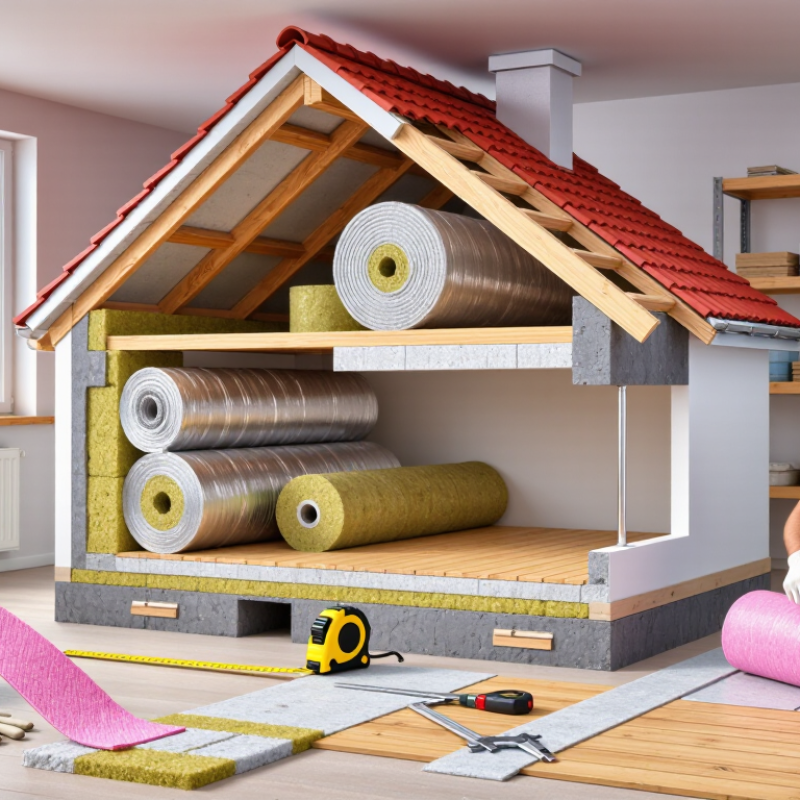
Understanding Thermal Insulation Roll Types and Materials
Thermal insulation rolls differ mainly by material, structure, and moisture response. Fiberglass rolls are lightweight, flexible, and widely used between timber studs or ceiling joists. Mineral wool rolls provide stronger fire resistance and better sound absorption. Natural-fiber rolls, such as those made from cellulose or wool, can reduce embodied impact, but they need careful moisture control. Reflective foil rolls work differently. They reduce radiant heat transfer only when facing an air space, so they cannot replace bulk insulation in every assembly.
The 2023 Global Status Report for Buildings and Construction, published by UNEP and GlobalABC, reports that buildings consume about 30% of global final energy and produce around 26% of energy-related emissions. That scale makes material selection significant. Check the declared thermal resistance, not only the product thickness. Installation quality matters too. Gaps can form around pipes, electrical boxes, and roof edges. Small gaps matter.
On site, flexible rolls are easier to fit around irregular framing, while dense mineral wool stays more stable in vertical cavities. However, advertised laboratory performance may not match a dusty, compressed installation. This is where careful inspection is needed. I would compare declared R-value, fire classification, vapor permeability, recycled content, and local climate requirements. A foil-faced roll can look impressive, but without a continuous air gap, its reflective benefit may be limited. That detail is easy to overlook.
How to Choose the Right Thermal Insulation Roll?
Understanding Thermal Insulation Roll Types and Materials
The chart compares typical thermal conductivity values for commonly used insulation materials.
Lower values indicate better thermal resistance at the same thickness. Actual performance may vary
with product density, moisture content, temperature, and installation quality.
Matching Insulation Performance to Your Building Requirements
Choosing the right thermal insulation roll starts with the building’s required performance, not the product’s thickness. The 2023 UNEP Global Status Report states that buildings consume about 30% of global energy and produce roughly 26% of energy-related emissions. Better insulation can reduce heat flow through roofs, walls, and floors, but the target should be based on local climate, construction type, and heating demand.
Check the declared thermal conductivity, usually shown as lambda (λ), and calculate the expected R-value for the installed thickness. The U.S. Department of Energy notes that recommended R-values vary by climate zone and building location. A roof in a cold region may need a much higher resistance value than an interior partition in a mild climate. Thickness is only one variable. Compression, gaps, moisture, and poorly fitted joints can reduce real performance.
Not enough.
A competent assessment also checks vapor control, fire classification, acoustic needs, and compatibility with the supporting structure. EN 13162 and ASTM C518 provide useful frameworks for evaluating insulation properties, but laboratory results are not the whole story. On site, rolls should fit tightly around services without being crushed. The 2023 Global Status Report for Buildings and Construction also emphasizes efficiency improvements as a major route to lower building emissions. I would not trust a high R-value alone. A neat specification can still fail when installation quality is ignored. Metrics matter, but the building envelope decides the outcome.
Checking Roll Thickness, Width, Density, and Installation Space
How to Choose the Right Thermal Insulation Roll?
Checking Roll Thickness, Width, Density, and Installation Space
Choosing an insulation roll starts with accurate measurements, not guesswork. Measure the cavity depth, joist spacing, and total surface area before ordering material. Thickness should fit the available space without forcing the roll into compression. A crushed layer can lose performance and create uneven coverage.
Width matters because narrow rolls leave cold strips between framing members. A roll that is slightly wider can fit firmly, but excessive pressure may reduce its intended thickness. Density also deserves attention. Higher density can improve handling and sound control, yet it does not automatically guarantee better thermal performance. Check the declared thermal resistance and installation guidance.
Leave room for safe installation around wiring, vents, and recessed equipment. Never block required ventilation paths. Local building requirements should guide clearances and fire-resistant treatments. On site, a sharp utility knife, straightedge, gloves, and a simple measuring tape usually prevent avoidable mistakes. Small gaps matter.
I once focused too much on thickness and overlooked irregular framing. That mistake caused extra cutting and several uncovered edges. A second inspection would have helped. Before closing the wall, check every joint, corner, and perimeter with a bright work light. The finished surface should look continuous, dry, and gently fitted, not tightly crushed.
Estimating Costs, Installation Needs, and Long-Term Value
Choosing a thermal insulation roll starts with the building, not the product label. Measure the roof or wall area, then add roughly 5% for cuts and fitting. Compare the required R-value, thickness, moisture resistance, and coverage per roll. A compressed roll can lose performance. Small gaps around pipes and roof edges matter.
Estimate the full cost, including materials, labor, access equipment, air sealing, protective gear, and waste removal. Ask contractors to separate each item. This exposes hidden preparation costs. The U.S. Environmental Protection Agency reports that air sealing and insulation upgrades can reduce annual heating and cooling costs by up to 15%. Actual savings depend on climate, energy prices, occupancy, and existing insulation. A spreadsheet cannot predict every draft.
Long-term value includes comfort, condensation control, and fewer temperature swings. The International Energy Agency reports that buildings use about 30% of global final energy. Better insulation therefore supports wider energy-efficiency targets. Inspect the roof first. Wet insulation should be replaced, not covered. Keep ventilation paths open near eaves, and install vapor control according to local building rules. A cheaper roll may seem attractive, but thinner coverage can require earlier replacement. Payback is not perfectly predictable. That uncertainty deserves honest discussion.
How to Choose the Right Thermal Insulation Roll? - Estimating Costs, Installation Needs, and Long-Term Value
| Insulation Type |
Typical R-Value
per inch |
Material Cost
per sq. ft. |
Typical Installed Cost
per sq. ft. |
Installation Needs |
Moisture and Fire Performance |
Expected Service Life |
Long-Term Value |
| Fiberglass Roll |
R-3.1 to R-3.8 |
$0.50–$1.50 |
$1.50–$3.50 |
Easy to cut and fit between standard framing; protective clothing and a mask are recommended. Air sealing should be completed separately. |
Noncombustible glass fibers, but the facing may require separate fire-code consideration. Performance decreases when compressed or wet. |
40– years when kept dry and undisturbed |
Best budget option for accessible attics, floors, and stud cavities where moderate installation effort is acceptable. |
| Mineral Wool Roll |
R-3.0 to R-3.3 |
$1.00–$2.50 |
$2.50–$5.00 |
Cutting is straightforward, but the material is denser and heavier than fiberglass. Joints should be tightly fitted. |
Naturally noncombustible and more moisture-tolerant than many fiber products; it should still be protected from persistent water leaks. |
50+ years with proper moisture control |
Strong choice where fire resistance, sound control, durability, and moisture tolerance justify a higher initial cost. |
| Recycled Cotton or Denim Roll |
R-3.4 to R-3.7 |
$1.50–$3.00 |
$3.00–$6.00 |
Simple friction-fit installation; less irritating to handle than fiberglass, but accurate cutting is needed to avoid gaps. |
Usually treated for flame resistance, but it can absorb moisture and must be kept dry. Verify local code requirements. |
40–60 years in dry assemblies |
A useful low-irritant and recycled-content option when indoor handling comfort and material sustainability are priorities. |
| Sheep Wool Roll |
R-3.5 to R-3.8 |
$2.50–$5.00 |
$4.00–$8.00 |
Easy to trim and friction-fit, but thickness and density must be selected carefully for the cavity depth. |
Can buffer limited humidity swings, but it is not waterproof. Insect and fire treatments may be required depending on the product and location. |
50+ years when protected from leaks and pests |
Higher upfront cost may be worthwhile for renewable material content, moisture buffering, and comfortable handling. |
| Flexible Elastomeric Foam Roll |
R-3.0 to R-4.0 |
$1.50–$4.00 |
$3.00–$7.00 |
Best for pipes, ducts, tanks, and irregular surfaces; seams must be sealed to limit condensation and air leakage. |
Closed-cell structure resists water vapor. Fire performance varies, so the product must match mechanical-code requirements. |
20–30 years, depending on temperature and UV exposure |
High value for condensation control and energy savings on mechanical systems, but usually not the most economical choice for large wall areas. |
| Aerogel Blanket Roll |
R-8 to R-10 |
$8.00–$20.00 |
$10.00–$25.00 |
Requires careful measuring, seam treatment, and suitable protective layers; professional installation is common for complex applications. |
Generally hydrophobic and able to tolerate high temperatures, but exact fire and temperature ratings must be checked for the product. |
20–50+ years in suitable conditions |
Best where space is extremely limited or high-temperature performance is important; its premium price needs to be justified by the space savings. |
Cost and selection notes:
- All prices are indicative U.S. dollar ranges for residential projects and can vary by region, thickness, access, labor rates, and project size.
- Installed costs generally include insulation placement but may exclude demolition, air sealing, vapor control layers, electrical relocation, surface repair, and disposal.
- R-values are approximate values per inch. The final thermal performance depends on total thickness, compression, thermal bridging, air leakage, and the complete wall, roof, or floor assembly.
- For a reliable comparison, calculate the cost per installed square foot at the required total R-value rather than comparing material price alone.
Conclusion
Choosing the right Thermal Insulation Roll requires a clear understanding of the materials and product types available, such as mineral wool, fiberglass, foam, or natural-fiber options. The best choice depends on your building’s climate, energy-efficiency goals, wall or roof structure, and required thermal performance. Before purchasing, compare the roll’s thickness, width, density, and flexibility with the available installation space to ensure proper coverage without compression or gaps.
It is also important to evaluate moisture resistance, fire safety, durability, and environmental impact. A suitable insulation roll should perform reliably in the intended conditions while supporting healthy indoor comfort and responsible construction practices. Finally, consider the full cost, including preparation, installation tools, labor, maintenance, and possible energy savings over time. Looking beyond the initial price helps you select a practical Thermal Insulation Roll that offers lasting value and dependable performance.

 JUTAO NEW MATERIAL