Who Are the Top Insulation Cover Manufacturers in China?

Time:2026-11-15 Author:Oliver
0%

Choosing an Insulation Cover manufacturer in China is not simply a matter of comparing prices or catalog photos. A capable supplier should understand operating temperatures, equipment geometry, access needs, and installation conditions. A removable jacket around a valve, for example, should fit closely without blocking its handle or maintenance points. Small details matter. Seam placement, fastening style, and insulation material can affect heat retention, worker comfort, and service life. Ask how suppliers confirm measurements, test samples, and manage changes between prototype and production.

This guide assesses manufacturers through practical indicators rather than unsupported claims about who is “the best.” Useful checks include product range, fabrication experience, material specifications, quality-control practices, customization capacity, and communication during sampling. Request clear details about temperature limits, outer-fabric options, cleaning requirements, and lead times. Where possible, compare a sample with the actual pipe, flange, or turbine component before approving a larger order. A polished website helps, but it cannot replace documented specifications or consistent sample workmanship.

Rankings have limits. Public information may be incomplete, and a capable factory may specialize in a narrow industry or product type. Treat each company profile as a starting point, then verify its claims directly and match its capabilities to your project. That extra check can feel slow. It is often cheaper than replacing a poorly fitting cover.
Who Are the Top Insulation Cover Manufacturers in China?

What Are Insulation Covers and Where Are They Used?

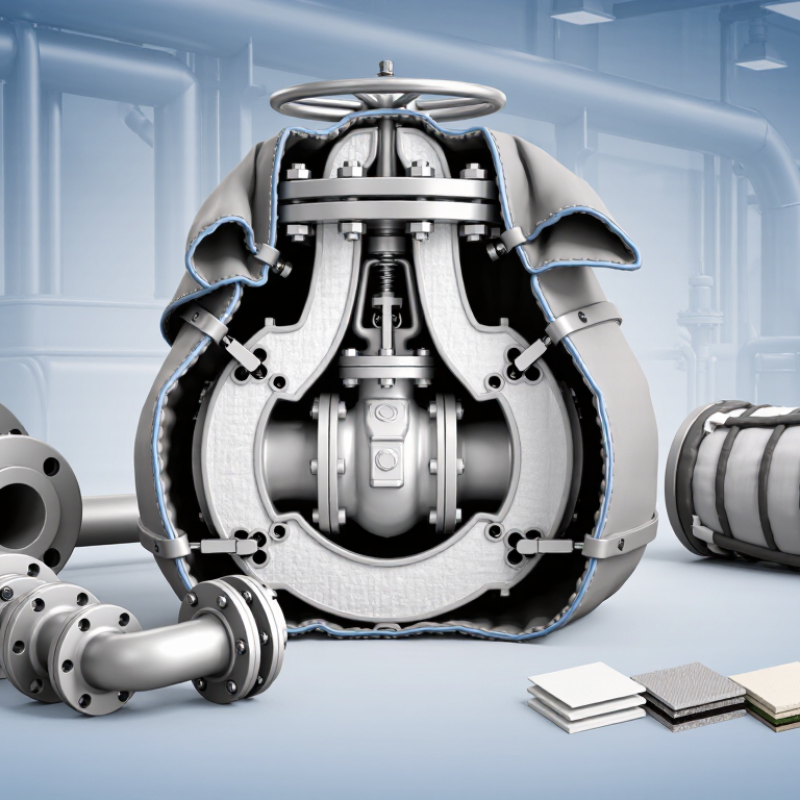
Insulation covers are removable thermal jackets fitted around pipes, valves, flanges, pumps, and other hot or cold equipment. They usually combine an insulating core with a durable outer fabric and closures such as straps or buckles. Unlike permanent insulation, a cover can be removed for inspection or maintenance, then refitted. The fit matters. Gaps around a valve stem or flange can leave a noticeable hot spot, while a loose jacket may shift during routine work.

Their uses span power generation, food processing, chemical production, and commercial buildings. They help limit heat loss from steam lines and reduce heat transfer from hot surfaces to nearby workers. On chilled pipes, suitable covers can help control condensation and unwanted heat gain. The International Energy Agency’s Energy Efficiency 2023 report puts industry at about 37% of global final energy consumption in 2022. That figure is not specific to insulation covers, but it shows why managing process heat deserves attention. The U.S. Department of Energy’s steam-system guidance also treats insulation as an important efficiency measure. A cover alone, however, cannot fix a poorly maintained system.

Tips: Match the cover to the operating temperature, moisture exposure, and maintenance schedule. Check its fit after installation. Small gaps matter.

How to Evaluate Insulation Cover Manufacturers in China

When evaluating insulation cover manufacturers in China, ask for evidence tied to your operating conditions, not a generic catalogue rating. The IEA’s Energy Efficiency 2023 report estimates that industry accounts for about 37% of global energy use, making avoidable heat loss a meaningful cost. Request thermal test results that identify the test temperature, insulation thickness, and measurement method. Check whether the report covers the complete jacket, including seams and closures, rather than only the insulation fill. Ask for samples. Inspect the stitching, tie spacing, and fit around valves or pipe bends.

Material claims need verification. Request specifications for the outer fabric, insulation core, temperature range, and any fire or chemical-resistance tests relevant to your site. Confirm that testing comes from a qualified laboratory, and compare it with applicable standards, such as ISO 12241 for thermal calculations on industrial installations. Small details matter. A cover that fits poorly can leave gaps where heat escapes or moisture collects. Ask how the maker handles custom dimensions, replacement panels, and repeat orders; then check those details against a pilot installation. I would not treat a polished certificate as proof of field performance. It may still miss wear from repeated removal, so ask for durability evidence and a clear inspection schedule.

Who Are the Top Insulation Cover Manufacturers in China? How to Evaluate Them

Suggested evaluation weights for comparing manufacturers. This is a practical framework, not a ranking or market-survey result.

Assess each supplier using documented evidence: material and temperature specifications, inspection records, sample-fit results, production schedules, and warranty terms. Adjust the weights to suit your application and project priorities.

Overview of China's Leading Insulation Cover Manufacturers

China’s insulation-cover manufacturers serve power plants, refineries, chemical facilities, and food-processing sites. Leading suppliers typically make removable covers for valves, flanges, pumps, and turbines, often to customer drawings. Their capabilities differ: some focus on rapid custom production, while others offer engineering support and documented thermal testing. That distinction matters.

Common constructions pair fiberglass or silica-cloth facing with mineral-wool, ceramic-fiber, or other insulation layers. Strong suppliers specify operating temperatures, fabric weight, seam construction, and closure type—not just nominal thickness. Fit is not trivial. Poorly shaped covers can leave gaps around valve stems or restrict maintenance access. IEA’s Energy Efficiency 2023 report estimates that industry accounts for about 37% of global final energy demand, underscoring the value of reducing avoidable heat loss. This is a global figure, not a China-specific estimate.

When assessing Chinese manufacturers, buyers can request drawings, material certificates, temperature limits, and sample covers for inspection. Ask how the factory handles irregular equipment, repeated removal, and moisture exposure. A low quoted price may omit these details. Even well-made covers need field checks; dimensions taken from old drawings can be wrong.

Materials, Products, and Customization Options

Industrial insulation covers in China vary by service temperature, equipment shape, and maintenance needs. Fiberglass and mineral-wool fabrics suit many removable pipe and valve jackets. Silica cloth can protect hot surfaces, while ceramic-fiber textiles serve higher-temperature zones. Aerogel inserts may help where clearance is tight, but cost and handling need review. No single material fits every line.

Products include valve covers, flange blankets, turbine wraps, and removable panels. The IEA’s 2023 Global Status Report for Buildings and Construction puts buildings at 30% of global final energy use in 2022. It also attributes 26% of energy-related emissions to buildings. These figures concern buildings, not industrial covers specifically, but they show why reducing heat loss matters. For factories, surface temperature, insulation thickness, weather exposure, and cleaning frequency guide material selection.

Customization should start with measurements from the actual equipment, including bolt positions, handles, and nearby obstructions. Buyers can specify outer fabric, insulation fill, stitching, closures, access windows, and labels. Request temperature limits, test methods, thermal conductivity data, and production drawings. Fit matters. A loose seam can undermine an otherwise suitable cover. Field measurements are not always perfect; trial-fitting one cover may reveal issues before a larger order.

How to Choose the Right Insulation Cover Manufacturer

Choosing an insulation cover manufacturer starts with the operating conditions, not a catalogue photo. The IEA’s 2023 industry tracking report estimates that industry uses about 37% of global energy. That figure is broad, but it shows why reducing heat loss deserves careful attention. Ask manufacturers for material data sheets, temperature limits, and test reports. Check whether their stated performance applies to the full cover assembly, including seams and fasteners. Fit matters. A loose edge can expose a hot valve, while an overly tight cover may slow maintenance.

Compare suppliers on practical details: Can they work from your drawings or measure equipment on site? Do they provide removable covers for valves, flanges, and irregular pipework? Ask how they control stitching, insulation thickness, and material traceability. Request a sample or trial installation, then check fit after repeated removal and refitting. A polished specification is useful, but it may not reveal awkward access or moisture problems. There is no perfect cover for every site; be ready to revise the design after field checks.

Tips: Send clear equipment dimensions and operating temperatures. Request written test evidence, not just verbal claims. Inspect one installed cover before ordering in volume. Also ask about repair options and replacement lead times. These details can seem minor until a cover needs to come off during a busy shift.

FAQS

What thermal test evidence should I request?

Ask for results showing test temperature, insulation thickness, and measurement method. The report should cover seams and closures, not just the insulation fill.

Which material details should a manufacturer provide?

Request specifications for the outer fabric, insulation core, operating temperature range, and relevant fire or chemical-resistance tests. Check that a qualified laboratory performed the tests.

What should I inspect on a sample cover?

Check the stitching, tie spacing, and fit around valves or pipe bends. Look for gaps. Small ones matter.

How can I check whether a cover will fit unusual equipment?

Share equipment drawings and ask how custom dimensions are handled. Test the fit during a pilot installation, since older drawings may be inaccurate.

What should I ask about repeat removal and maintenance?

Ask about replacement panels, repeated removal, and an inspection schedule. Request durability evidence; a tidy sample may not show wear after regular use.

Is a certificate enough to confirm field performance?

No. I would not trust a polished certificate alone. It may miss wear, moisture exposure, or poor fit. I could still overlook something.

How can I compare different cover constructions?

Compare stated temperature limits, fabric weight, seam construction, and closure type. Nominal thickness alone gives an incomplete picture.

What details might a low quote leave out?

It may not include custom fitting, documented thermal tests, or support for irregular equipment. Ask for these details in writing before comparing prices.

Conclusion

Insulation Cover products are flexible thermal barriers designed to reduce heat loss, protect equipment, and support safer, more efficient operations. They are commonly used on pipes, valves, tanks, pumps, and other industrial equipment in sectors such as manufacturing, energy, and building services. When comparing manufacturers in China, buyers should assess engineering experience, production capacity, quality-control procedures, material traceability, customization capabilities, delivery reliability, and after-sales support.

Available options may include different insulation fabrics, inner cores, fastening systems, shapes, and temperature ratings. The right manufacturer should be able to tailor dimensions and construction to the equipment and operating environment while providing clear technical information and consistent quality. By defining performance requirements, confirming product specifications, and comparing suppliers on both technical and service criteria, buyers can select an Insulation Cover manufacturer that meets their project needs and supports dependable long-term use.


Oliver

Oliver

Oliver is a seasoned marketing professional with a wealth of expertise in driving brand awareness and engagement. With a deep understanding of our company's product offerings, he consistently delivers high-quality content that enriches our professional blog. His insights not only shed light on......